


At the End of the Day – We all Want to be Part of a Beehive
By Roni Ben Efrat
Wafa Tiara was ecstatic. She was invited to be one of a delegation of four to the international “Learning from the Bees” annual conference, which this year took place in Floyd, Virginia (September 25-27). Coming from the village of Kafr Qara in Israel, a mother of four sons and a grandmother of four boys, this would be her first visit to the USA.
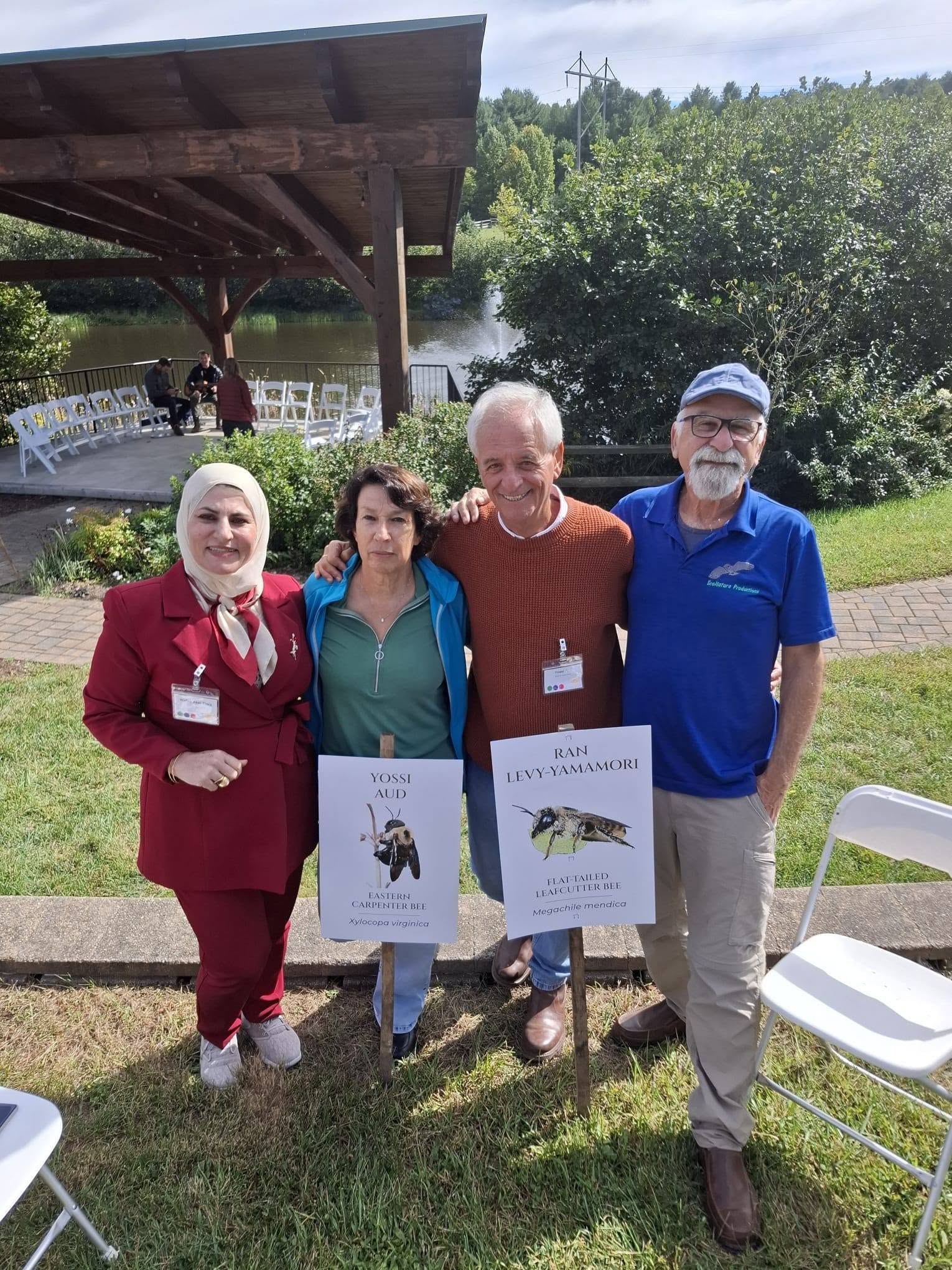
The conference invited the delegation to present the documentary film “Women for a Sweeter World”, first screened in June 2025 in Tel Aviv before 100 members of the nation-wide coalition, Bees for Peace. Wafa, who participates in the film, has organized with-in her involvement with “Sindyanna of Galilee” and MAAN Workers Association” three groups of 41 women from twelve Arab and Jewish communities near Israel’s coast—the so-called Triangle—who have learned and practice beekeeping.
Director and producer of the film Ran Levi Yamamori foregrounds seven courageous and inspiring members. The timing is significant: the filming takes place a few months after October 7, 2023. The entire country was in trauma, and trust between Jewish and Palestinian citizens of Israel was rare.
The film opens with the remarkable story of Yossi Aud (the founder of Bees for Peace who headed the delegation), whose unexpected encounter with bees during his recovery from cancer blossomed into a nationwide movement for bee preservation with profound ecological and human impact.
This intimate documentary introduces viewers to women from diverse backgrounds — Jewish, Muslim, Christian, Druze, and Bedouin — united around a shared goal: to learn biodynamic beekeeping.
As they master the delicate art of keeping bees, the women simultaneously cultivate something just as precious — understanding and respect across deep national, cultural and religious divides.
I have seen this movie twice. The experiences, described by women from diverse points of view, leave no one untouched.
Michal Masad, a social worker who also appears in the film, from the Mateh Asher region of Upper Galilee, is the fourth member of the delegation. Michal coordinated two groups of women from Jewish and Bedouin backgrounds. I particularly remember the scene when the women she recruited come to the local community center to extract their first yield, and their hands dip together in the sticky, amber-colored honey. This image itself raises deep thoughts in me.
Michal, a grandmother, was trapped in one of the southern communities attacked on October 7. Two of the villages in her region— Adamit (Jewish) and Aramsheh (Bedouin) — were evacuated for months during the war, and they had no choice but to leave their beehives behind.
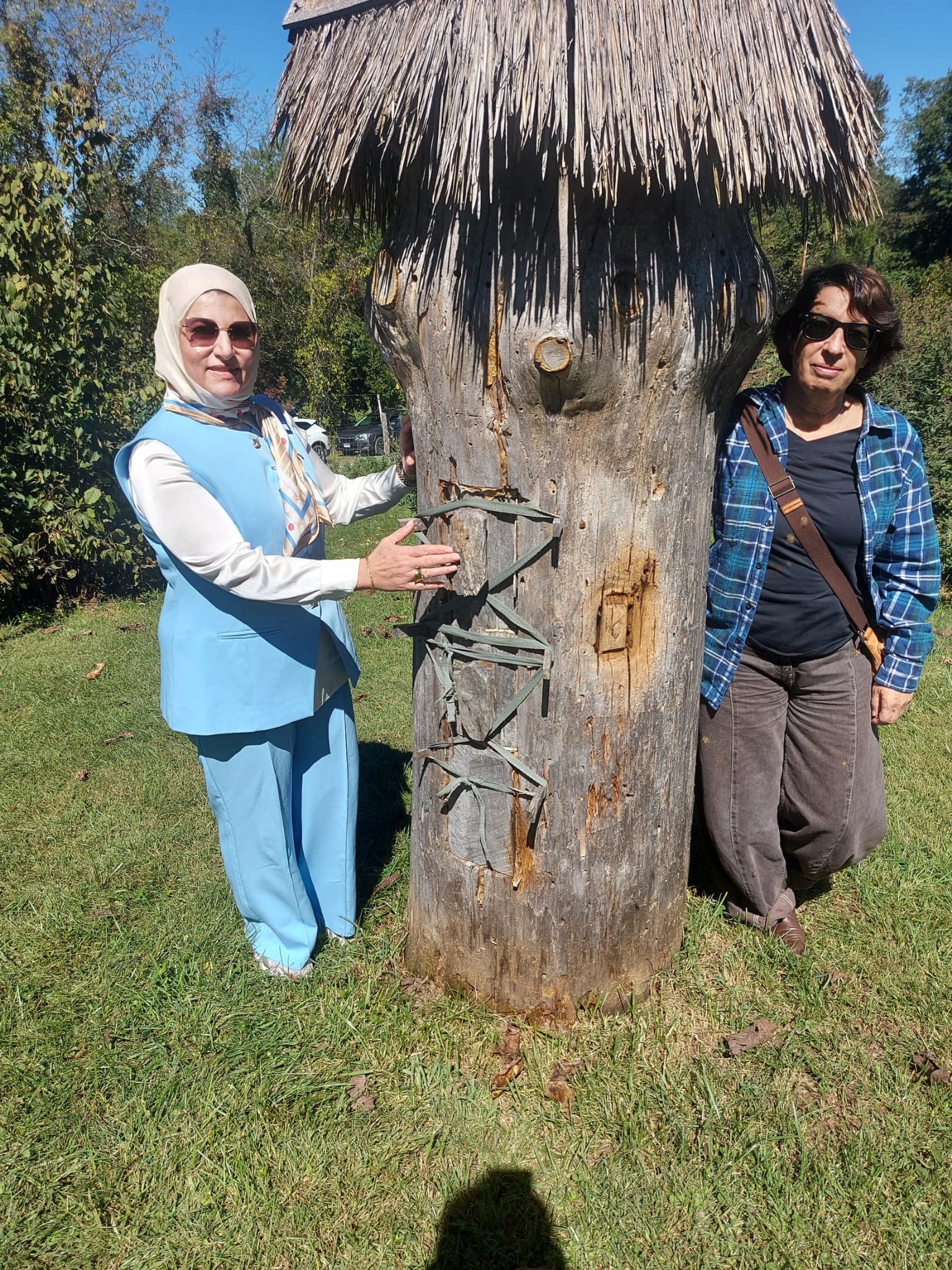
The trip’s itinerary included the Jewish Community Center of Pozez in Northern Virginia, the American University of Washington DC, and other locations.
Ran Levi Yamamori says that after a “modest” screening at 7.00 a.m. [you read right!], a buzz (human, not apiary) began about the film. It grew louder after some speed talks by Yossi and friendly encounters between the delegates and the audiences. An additional screening was scheduled for the evening and it was packed!
All delegation members agreed that they wanted to show that Israel is more than conflict and war. “We struggle for friendship, for understanding and for our shared planet. We want to achieve harmony,” says Wafa. “If the bees can do it, so can we.” Michal adds, “At the end of the day, don’t we all want to be part of the hive?”
Michal makes a distinction between the American audience and those who come from Jewish or Israeli backgrounds. “In a taxi, a driver asked us where we were from. When we answered, he pointed at Wafa, who wears a headscarf, and asked, ‘Well, what is she doing here?’ We all laughed.”
Yossi talks about an experience he had at the American University of Washington DC. “After students did not turn out to an invitation for the screening, the professor who invited us did not give up. He decided to bring the film to his own lesson of an hour and a half in the department for Conflict Resolution. We saw the film, and then I talked about our nationwide project. The students were mesmerized. I noticed that they were not playing with phones. The bell rang and no one moved. The professor told me he never saw anything like it. I was surrounded with questions after the session.”
Wafa came home to numerous questions from her group members. Michal is heading the formation of a new bee group. The film is traveling around the world, trying to open bridges and the hope of another way.
To schedule screenings – online or in-person – please contact Yossi Aud at yossiaud@gmail.com.